In the fast-changing world of precision navigation, choosing the right Gnss Receiver Imu is a pretty big deal. It’s more than just picking a device — it really can make or break how reliable your entire navigation system is. Whether you’re working with self-driving cars or drones, the hardware you select can have a huge impact on how well everything runs. With so many options out there, it might feel overwhelming to figure out what’s truly important. That’s why understanding what sets different GNSS receiver IMUs apart is so key — whether you’re an engineer, a developer, or just making big decisions.
The ideal GNSS receiver IMU isn’t just about getting accurate position data — it needs to play nicely with other sensors and systems, too. Things like accuracy, how often it updates, size, and how much power it drinks are all super important. And don’t forget to think about where your system will be used — different environments can really shake things up and affect performance.
In this article, I’m sharing some of my top tips for picking the perfect GNSS receiver IMU. We’ll walk through the details of specs and features so you can really understand what to look for. Having this knowledge means you can make smarter choices, boost your navigation system, and push your performance to the next level.

Understanding GNSS Receiver IMU Technology
Global Navigation Satellite System (GNSS) Receiver Inertial Measurement Units (IMUs) are vital technologies for precise navigation applications. The integration of GNSS and IMU technologies enhances positional accuracy, enabling users to achieve higher reliability under challenging conditions such as urban canyons or dense foliage. A GNSS receiver captures satellite signals to determine geographic positioning, while an IMU utilizes accelerometers and gyroscopes to monitor dynamic movements and changes in orientation. This combination allows for continuous and accurate tracking, even when GNSS signals are obstructed.
Understanding the operational principles of GNSS receiver IMUs is crucial for selecting the right equipment for specific applications. Key aspects include the performance metrics such as sensitivity, signal-to-noise ratio, and update rates, which determine the device's effectiveness in delivering accurate data. Additionally, the type of filtering algorithms employed can significantly affect overall performance in motion conditions, as they help in processing the data from both the GNSS and IMU components.
By grasping these fundamentals, users can make more informed decisions when choosing a system that best meets the requirements of their precision navigation tasks.
Key Features to Consider in GNSS Receiver IMUs
When selecting a GNSS receiver IMU for precision navigation, several key features should be prioritized to ensure optimal performance. First and foremost, the accuracy of the receiver is critical. Look for an IMU that offers high precision positioning capabilities, typically with a multi-frequency GNSS capability that can mitigate errors caused by atmospheric conditions or signal interference. This feature not only enhances the device's reliability in various environments but also aids in achieving centimeter-level accuracy, which is essential for applications demanding precise spatial data.
Another vital aspect is the integration and drift performance of the inertial measurement unit. A high-quality IMU should provide robust sensor fusion algorithms that effectively combine data from the GNSS with inertial sensors, minimizing drift over time. Additionally, consider the sensor’s dynamic range and update rate; a device that can handle fast movements and provide frequent updates will ensure smooth and accurate navigation. Lastly, assess the environmental durability of the GNSS receiver IMU, particularly its resistance to dust, moisture, and extreme temperatures, as these factors are crucial for field applications and outdoor usage.
Assessing Accuracy and Precision for Navigation Tasks
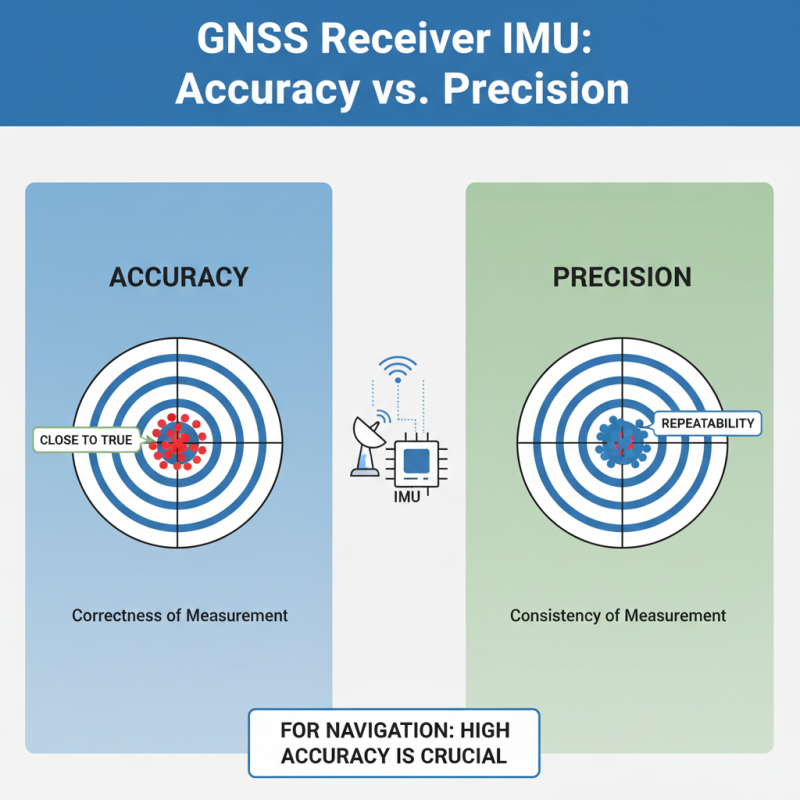
When it comes to selecting the right GNSS receiver IMU for precision navigation, understanding the distinction between accuracy and precision is crucial. Accuracy refers to how closely a measurement aligns with the true value, while precision describes the repeatability of measurements under consistent conditions. In navigation tasks, high accuracy ensures that the location information is as close to the actual position as possible. For this reason, it's vital to evaluate the specifications of GNSS receivers and IMUs, focusing on their stated accuracy metrics under various operational scenarios.
Additionally, the precision of the navigation system is equally important, as it affects how consistently the system can provide reliable positional data. A receiver with high precision can produce similar outputs across multiple observations of the same point, minimizing the uncertainty in navigation results. Factors such as signal quality, multipath effects, and environmental conditions can influence both accuracy and precision. Therefore, navigating these elements effectively is essential when selecting a GNSS receiver IMU, ultimately leading to improved performance in precision navigation tasks and real-time positioning applications.
Evaluating Integration Options with Existing Systems
When selecting a GNSS receiver IMU for precision navigation, evaluating integration options with existing systems is crucial for enhancing overall system performance. A study by the International GNSS Service noted that system compatibility can significantly reduce implementation time and costs, with proper integration potentially improving position accuracy by up to 30%. Potential users should assess the output interfaces and protocols of the GNSS receiver IMU to ensure seamless communication with legacy systems, which often include inertial measurement units and navigation software.
Moreover, the integration process should consider the existing infrastructure, including data processing and operational constraints. According to the GNSS Market Report, around 45% of GNSS users cite interoperability issues as a major barrier to adopting new technologies. Therefore, it is essential to evaluate whether the selected GNSS receiver IMU supports the necessary data formats and communication protocols to facilitate integration. By carefully considering these factors, organizations can leverage their current technology investments while enhancing navigation accuracy and reliability in their operations.
Understanding Environmental Factors Affecting Performance
When selecting the right GNSS receiver IMU for precision navigation, understanding the environmental factors that can impact performance is crucial. Factors such as signal obstructions, multipath interference, and atmospheric conditions play significant roles in the accuracy and reliability of positioning data. Dense urban environments featuring tall buildings can lead to signal blockage, while reflective surfaces may cause multipath errors, resulting in incorrect readings.
One of the key tips to consider is the location of your operations. Assessing the landscape and potential obstructions can guide you in choosing a receiver that can mitigate these issues. For example, if your work involves navigating through forested areas or urban canyons, look for devices equipped with advanced algorithms that can filter out noise and correct for multipath effects.
Another important consideration is the atmospheric conditions. Variability in the ionosphere and troposphere can introduce errors in GNSS signals. To counteract these fluctuations, choose receivers with robust correction capabilities, such as those utilizing real-time kinematic (RTK) positioning or satellite-based augmentation systems (SBAS). By prioritizing these environmental factors and selecting an IMU that can adapt to them, you can significantly enhance the accuracy of your precision navigation tasks.
Comparing Cost vs. Benefits of Different Models
When selecting a GNSS receiver IMU for precision navigation, understanding the cost versus benefits of different models is crucial. According to the GNSS Market Report published by the European GNSS Agency, the demand for advanced GNSS technologies is projected to grow at a compound annual growth rate (CAGR) of 15% through 2025. This growth is fueled by the ever-increasing reliance on precision navigation systems across various sectors, including autonomous vehicles, agriculture, and aerial applications.
Cost considerations often play a significant role in decision-making. While budget-friendly models can deliver basic navigation capabilities, higher-end systems provide enhanced accuracy, reliability, and additional functionalities such as real-time kinematic (RTK) positioning. A study by the National Robotics Initiative indicated that implementing high-precision setups can reduce operational errors by up to 30%, demonstrating that the initial investment in superior technology can yield significant long-term savings. As users weigh their options, they must consider not just the purchase price, but also the potential benefits that more advanced features can bring, including increased efficiency and improved safety in navigation-related tasks.
Furthermore, the total cost of ownership is equally important. According to the IEEE Access Journal, maintenance and operational costs for advanced GNSS systems can vary greatly depending on performance levels and environmental withstand capabilities. Users should assess how often their receivers will need calibration or replacement and how these factors may influence overall operational budgets. Ultimately, a holistic view of both immediate costs and long-term operational benefits is essential for selecting the right GNSS receiver IMU suited for precision navigation needs.
Reviews and Recommendations from Industry Experts
When selecting the right GNSS receiver IMU for precision navigation, insights from industry experts can provide invaluable guidance. These professionals emphasize the importance of understanding the specific application requirements. For instance, the operational environment—whether it’s urban, rural, or challenging terrain—can significantly influence the choice of receiver. Experts recommend conducting thorough needs analyses to ascertain features such as accuracy, stabilization, and the ability to handle multipath effects, which can greatly enhance navigational reliability.
Furthermore, reviews from experts often highlight the significance of compatibility and integration capabilities. A GNSS receiver must work seamlessly with existing systems and software to ensure efficient data processing and utilization. Recommendations frequently stress the importance of evaluating the support and resources provided by manufacturers, such as documentation, technical support, and community forums. These aspects play a crucial role in effective implementation and long-term usability, ensuring that users can maximize the potential of their GNSS solutions for precision navigation.
Unlocking Precision: The AP30 Laser Dual-Cameras RTK GNSS Receiver with Cutting-Edge Technology for Advanced Surveying
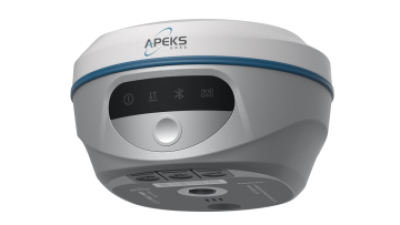
The AP30 Laser Dual-Cameras Rtk Gnss Receiver represents a significant leap in the realm of advanced surveying technology. By integrating state-of-the-art GNSS systems with a highly sensitive Super IMU, this device offers unparalleled precision in positioning tasks. The addition of millimeter-level green laser technology further enhances its capabilities, allowing surveyors to capture data with remarkable accuracy and efficiency. This cutting-edge receiver is designed to meet the rigorous demands of modern surveying projects, where precision is not just preferred but required.
One of the standout features of the AP30 is its dual-camera system, which provides users with real-time visual feedback, facilitating easy alignment and validation of measurements in challenging environments. This technology significantly reduces the time spent on-site, enhancing productivity without compromising accuracy. With advanced algorithms and robust analytics, users can trust that the data collected will be reliable, paving the way for more informed decision-making in construction, land development, and various other applications. The combination of these innovative technologies makes the AP30 an indispensable tool for professionals who strive to achieve the highest standards in surveying work.
FAQS
: The accuracy of the receiver is critical, with a preference for multi-frequency GNSS capability to mitigate errors from atmospheric conditions or signal interference.
High-quality IMUs provide robust sensor fusion algorithms that effectively combine GNSS data with inertial sensors, minimizing drift over time and ensuring more accurate navigation.
Durability against dust, moisture, and extreme temperatures is essential for field applications and outdoor usage, as these conditions can affect the device's performance.
System compatibility can significantly reduce implementation time and costs, with proper integration potentially improving position accuracy by up to 30%.
It is essential to ensure that the selected GNSS receiver IMU supports the necessary data formats and communication protocols to facilitate seamless integration with existing systems.
The operational environment, whether urban, rural, or challenging terrain, can significantly impact the required features of the receiver, such as stabilization and accuracy.
Experts recommend conducting thorough needs analyses to understand specific application requirements, which can enhance navigational reliability.
The availability of documentation, technical support, and community forums from manufacturers is crucial for effective implementation and long-term usability of GNSS solutions.
Understanding application requirements allows users to identify features that will enhance accuracy and performance in their specific navigation context.
By leveraging current technology investments and ensuring compatibility with existing infrastructures, organizations can enhance navigation accuracy and reliability in their operations.
Conclusion
When selecting the right GNSS Receiver IMU for precision navigation, it is essential to understand the underlying technology and its key features. Evaluating the accuracy and precision capabilities, as well as considering how the GNSS Receiver IMU integrates with existing systems, can significantly enhance navigation effectiveness. Additionally, awareness of environmental factors that may impact performance is crucial for optimal application.
Cost versus benefits analysis is another critical aspect of the decision-making process. By examining various models and their reviews from industry experts, users can make informed choices that align with their specific navigation tasks. Overall, a comprehensive understanding of these elements will lead to the successful selection of a GNSS Receiver IMU that meets precision navigation requirements.